Winkler Ranch · Product redesign
Electric Fence Reel Parts
Field-tested replacement components built around real reel failure modes
01 / Challenge
Replace the weak parts without replacing a $102 reel.
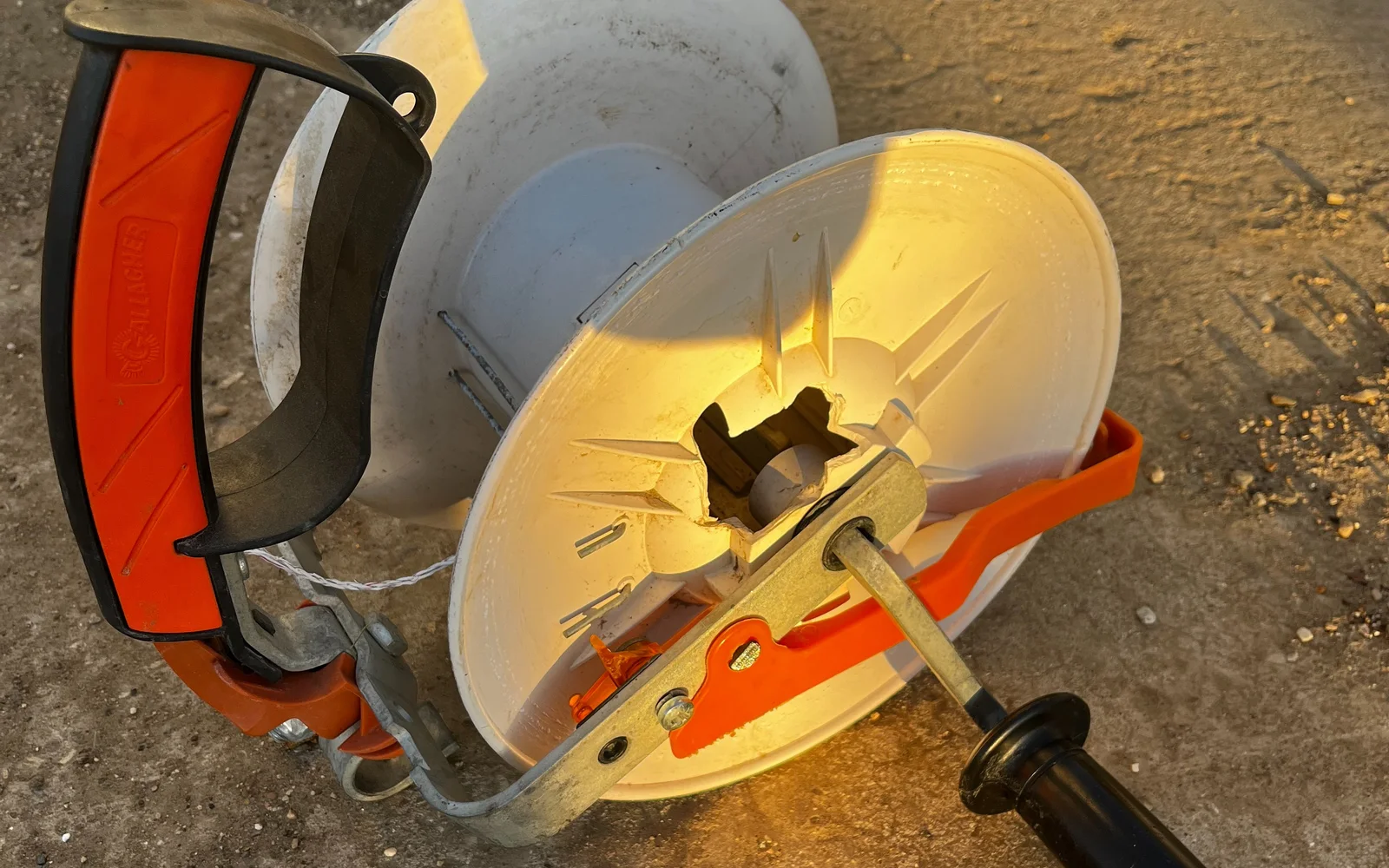
The commercial reel worked well until its high-wear plastic components failed. Buying another complete reel would repeat the same weak points and cost $102.
The useful design problem was not simply copying the broken geometry. Each replacement needed to fit the existing hardware, survive ultraviolet exposure and field handling, and improve the failure mode that caused the original part to break.
02 / Design
Reinforce the load paths and simplify the motion.
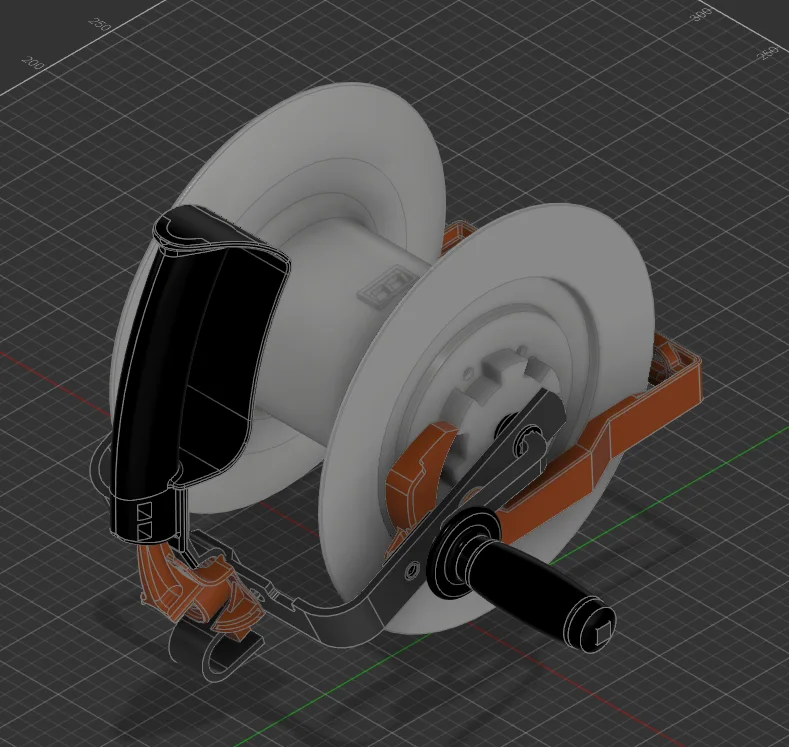
I modeled the assembly in Fusion 360 and rebuilt the spool, ratchet, planetary gearbox, and latch as printable components. The spool and ratchet gained material in their highest-stress regions, while the gearbox doubled the number of planet gears to distribute torque across more teeth.
The latch geometry was adjusted to twist more smoothly. Every change was constrained by the original frame, handle, fasteners, and fence-wire path so the printed set remained a direct replacement.
03 / Validation
Print it, install it, and let ranch work expose the next weakness.
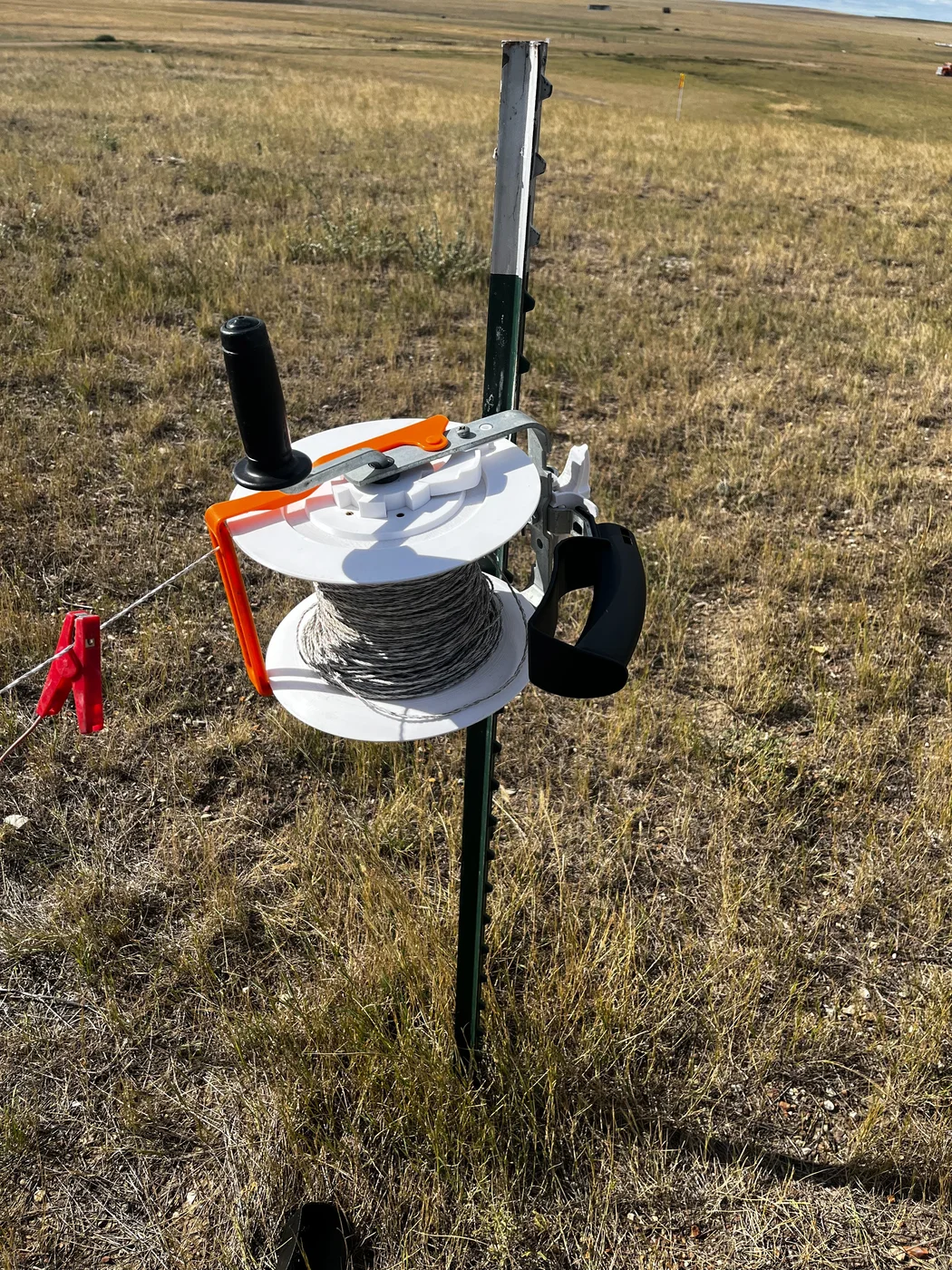
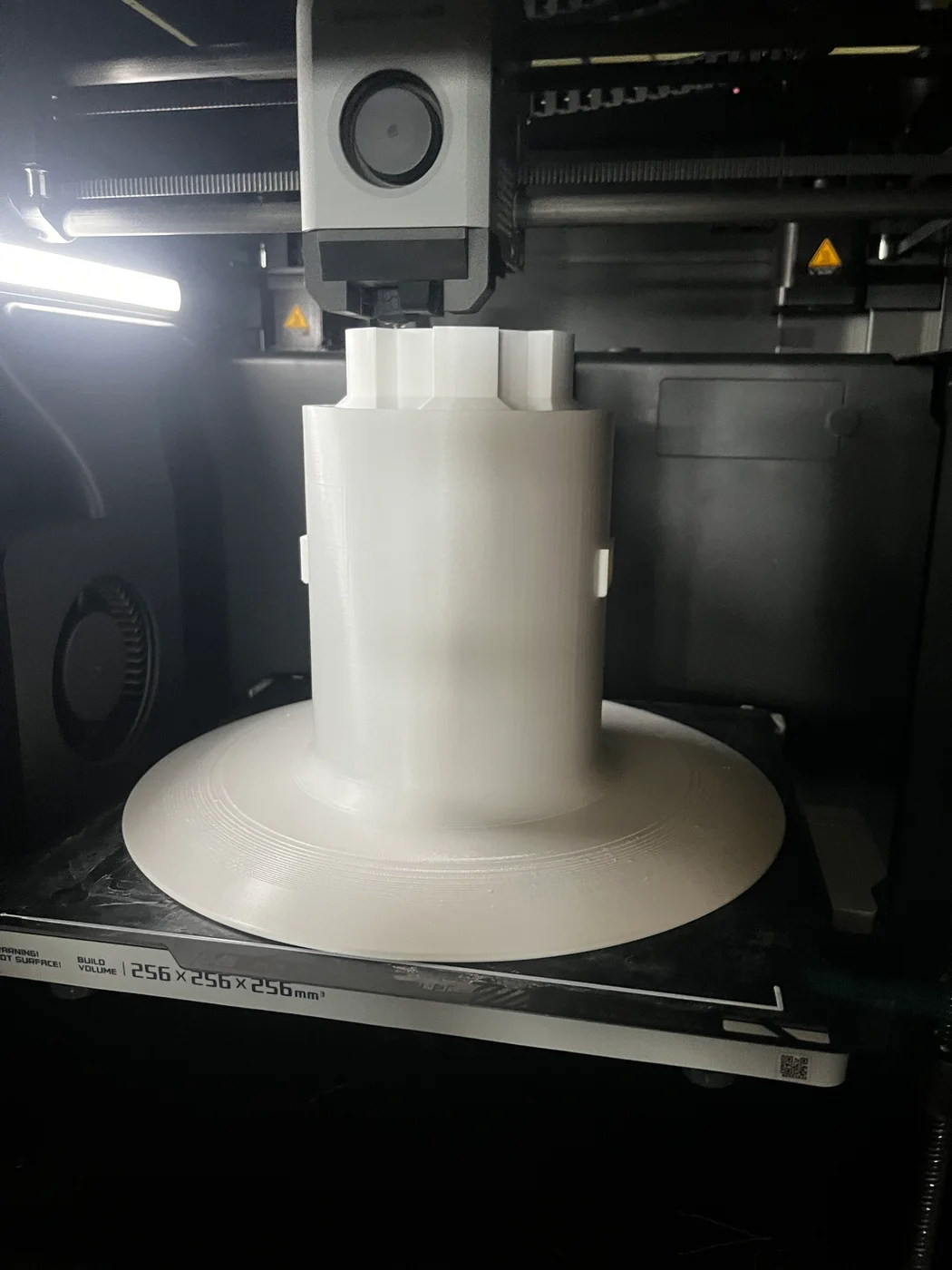
The final components were printed in durable, UV-resistant PETG and installed on working reels. Field use served as the beta test for fit, winding behavior, latch motion, and impact resistance.
The complete replacement set cost $25, and none of the redesigned parts had failed when the project was documented.
Interactive model
Inspect the geometry.
Orbit the working assembly, then select the numbered callouts to inspect each redesign.
Loading assembled model…
Design callout
Reinforced spool
Material was added around the spool's highest-stress interfaces to resist the cracking seen in the original part.
Drag to orbit · scroll to zoom · right-drag to pan
Tools and methods
- Fusion 360
- PETG
- Assembly design
- Failure analysis
- 3D printing
- Field testing