Formula SAE · Testing and composites
Carbon-Fiber Insert Tensile Testing
Sponsored materials research for bonded Formula SAE suspension joints
01 / Research question
Which bonded joint earns a place in a Formula SAE suspension system?
The team needed data, not assumptions, to compare 7075-T6 aluminum, 4130 steel, and Grade 5 titanium inserts across three structural epoxies. Welded steel specimens provided the absolute-strength baseline.
The study was prepared with Taylor Race Engineering and focused on ultimate tensile strength, load-displacement behavior, repeatability, cost, and observable failure modes.
02 / Test architecture
Control the geometry and process so the variables stay legible.
I completed the literature review, drafted the requirements and test plan, coordinated manufacturing responsibilities with the sponsor, designed fixtures and specimens, and fabricated the bonded coupons.
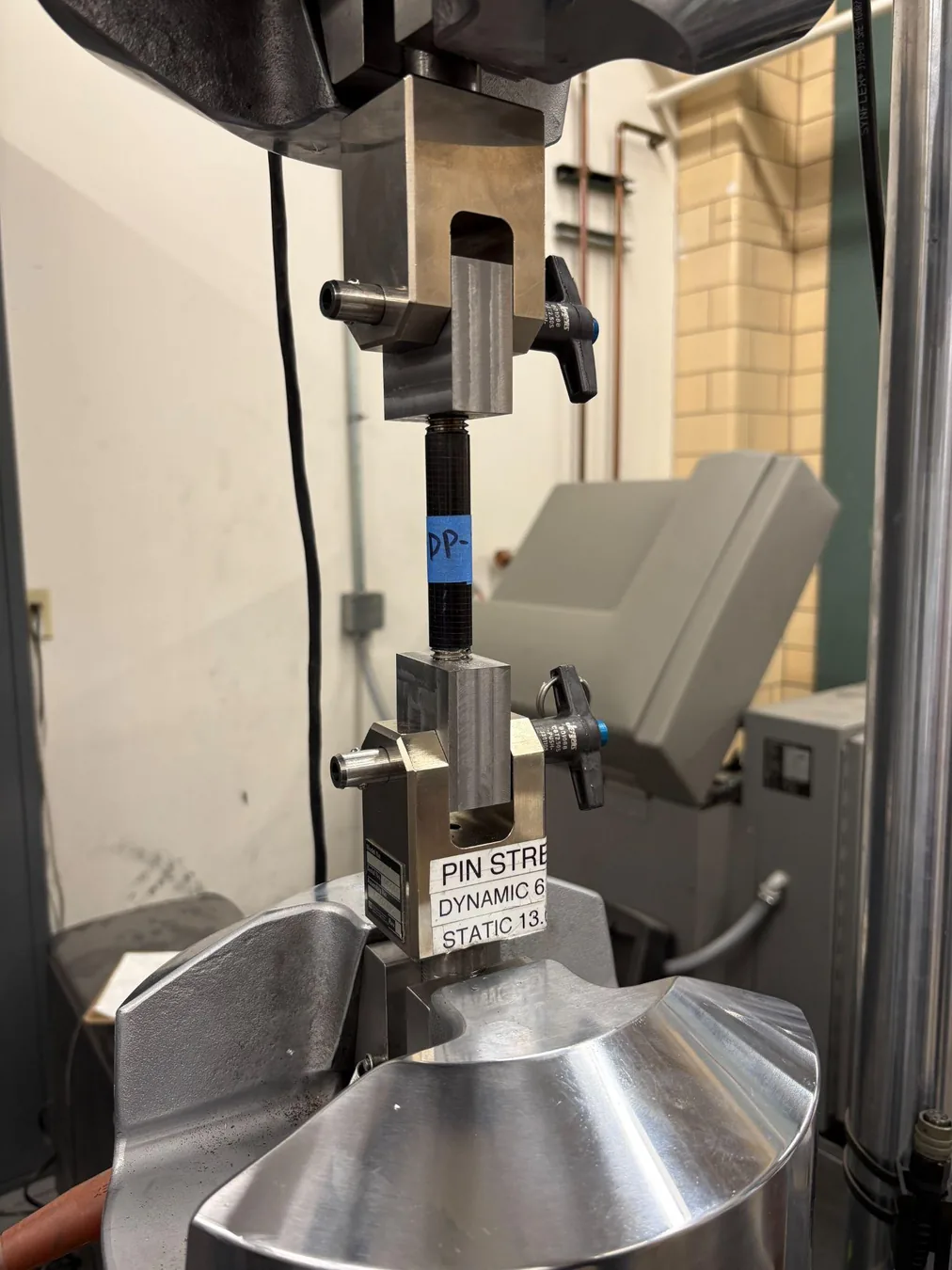
Every specimen used a 3-inch carbon-fiber tube, a one-inch bond length, controlled surface preparation, 2% glass beads by weight, and a 48-hour room-temperature cure. Tests ran at 2 mm/min with data captured at 10 Hz or faster.
- Three monotonic tests per bonded configuration, plus welded baselines and a grooved-aluminum comparison.
- Peak load, displacement, specimen mass, and failure observations collected for each test.
- Results processed into configuration, material, adhesive, and cost comparisons.
03 / Results
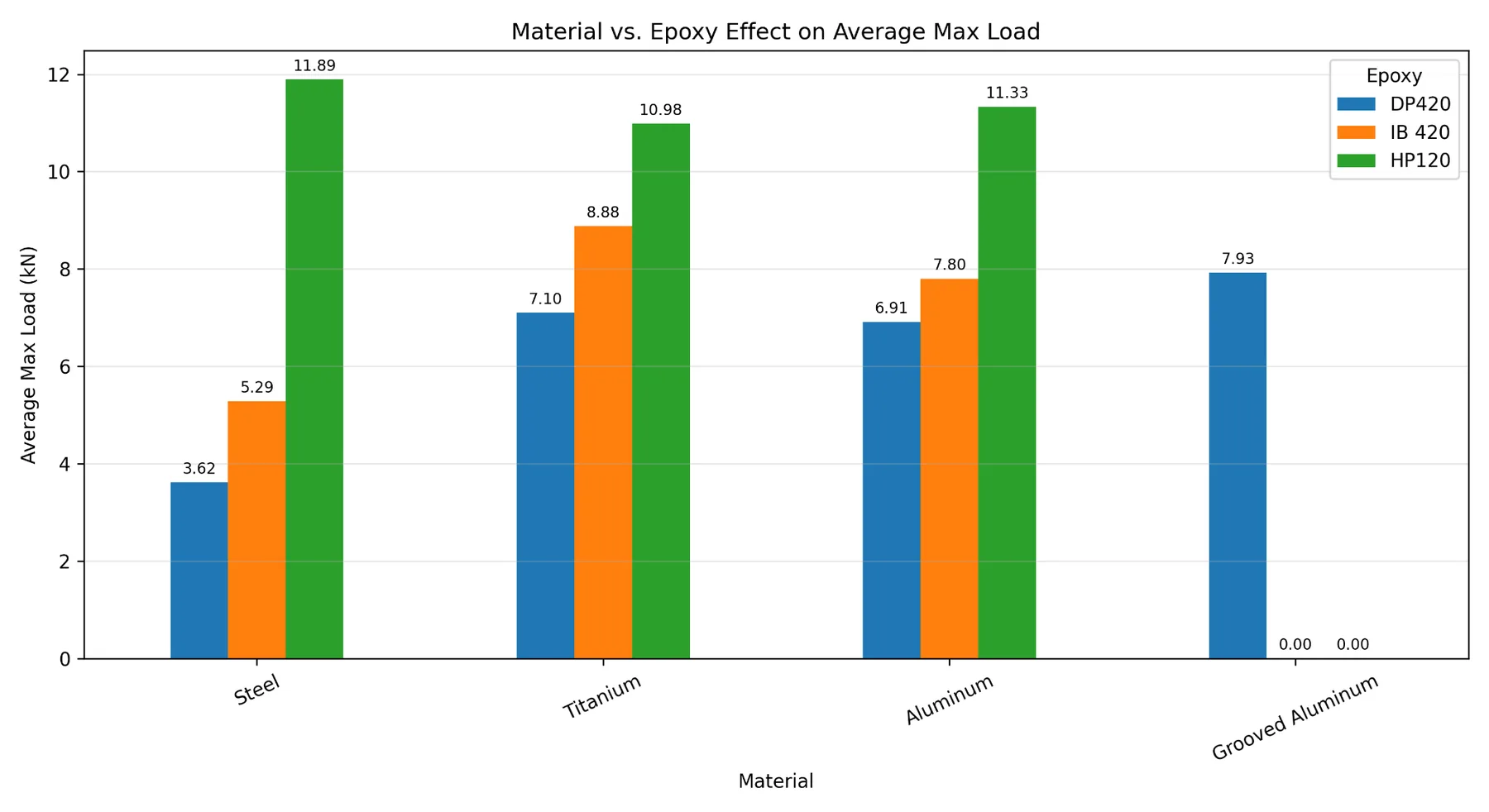
Adhesive selection mattered more than insert material.
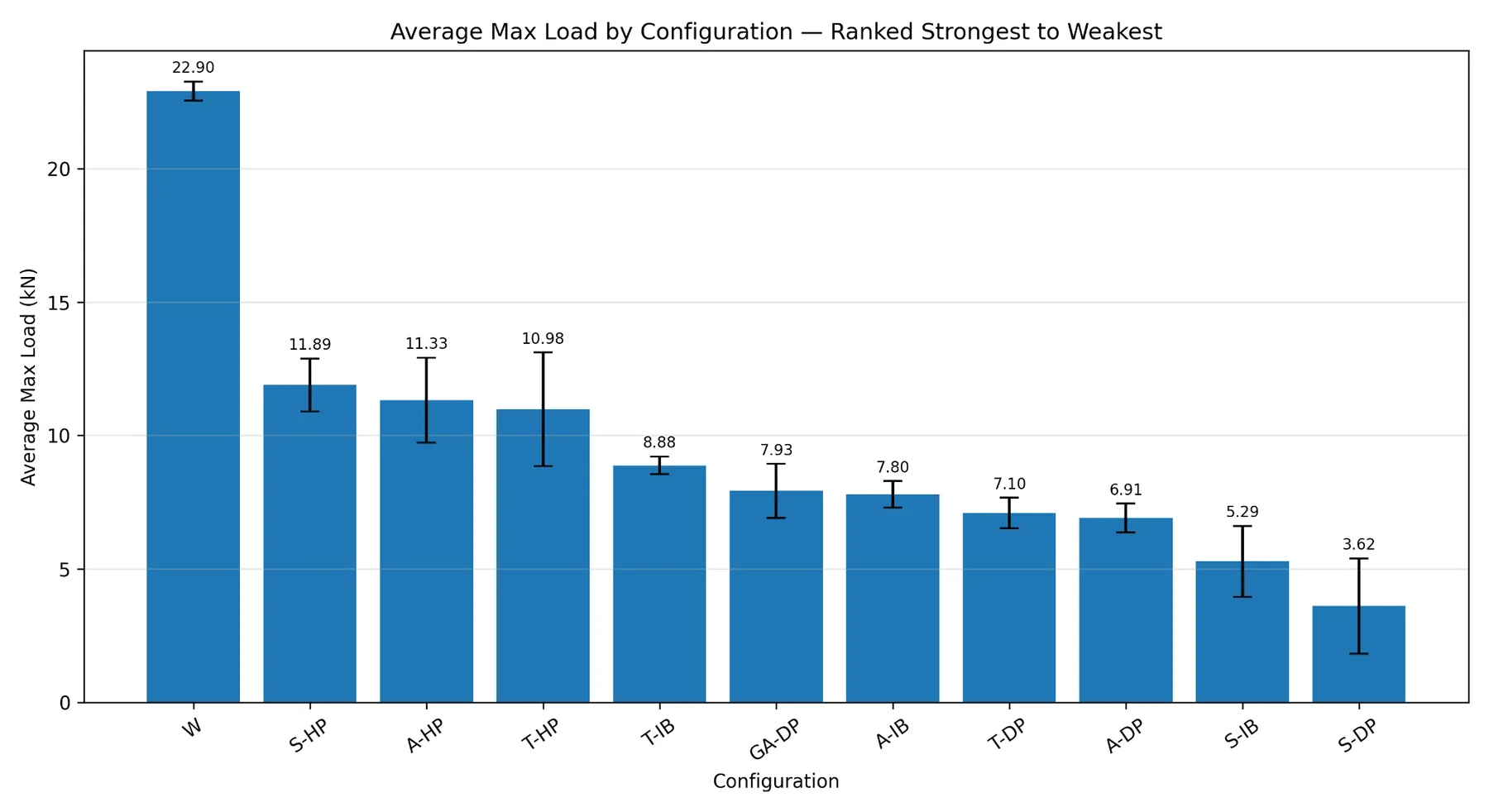
Loctite E-120HP produced the strongest bonded average at 11.4 kN and the best measured strength-to-purchase-cost ratio. Infinity Bond EP 420 averaged 7.3 kN, while DP420 averaged 5.9 kN across the standard bonded configurations.
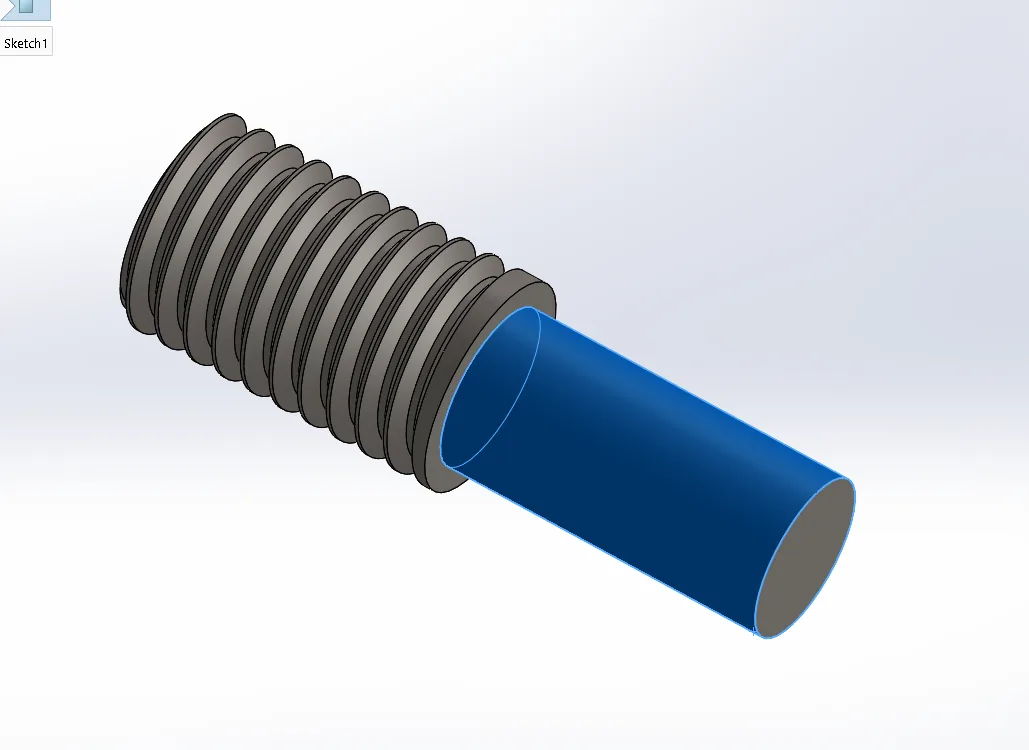
Adding radial grooves to the aluminum insert increased the DP420 average from 6.9 kN to 7.9 kN. Welded steel remained the strongest absolute baseline at 22.9 kN, while bonded aluminum retained the clearest weight advantage.
Tools and methods
- SolidWorks
- MTS load frame
- Python
- Test design
- Composite fabrication
- Data analysis